How Quantum Computing Could Transform Video Games: A Glimpse into the Future of Gaming
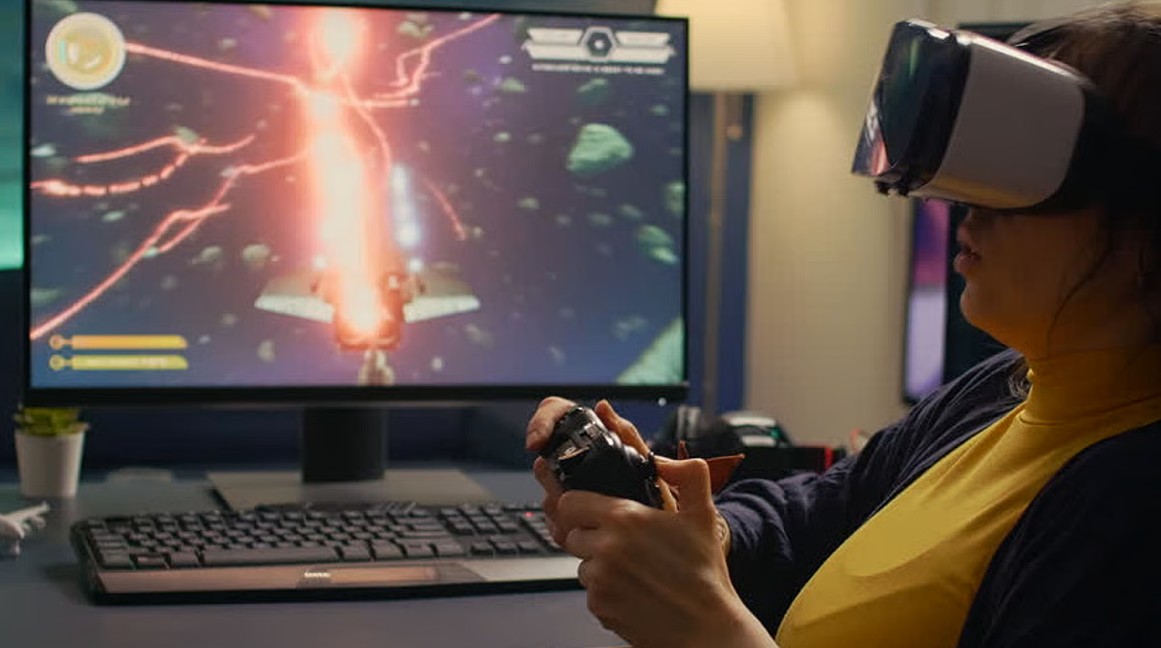
Picture this: You’re playing your favorite video game, immersed in a world so detailed that it feels more like reality than a digital landscape. The artificial intelligence behind the non-player characters (NPCs) is so smart that it reacts in ways that seem almost human. The graphics are so crisp and realistic, you can almost feel the wind or hear the subtle creaking of the floorboards beneath your character’s feet. But what if I told you this is just the beginning? What if I told you that the future of gaming could be revolutionized by something that sounds straight out of science fiction – quantum computing?
Quantum computing has long been the stuff of high-level science and tech circles, with many of us merely hearing about it in passing. But its potential is vast, and as the technology matures, it could radically change how video games are developed and experienced. This might sound like a far-off idea, but the truth is, it could happen sooner than you think. So, how exactly could quantum computing transform video games? Let’s explore the exciting possibilities!
A New Level of Game Complexity
First things first, let’s talk about the power of quantum computing. Traditional computers, like the ones most of us use every day, process information in binary – as zeros and ones. However, quantum computers take it a step further with quantum bits, or qubits, which can exist in multiple states at once, thanks to the phenomenon of superposition. This means quantum computers can perform many calculations simultaneously, making them exponentially faster and more powerful than traditional machines.
For video games, this opens up new possibilities for creating more complex and dynamic worlds. Imagine a game world that isn’t just scripted, but is continuously adapting to every single action a player takes. With the immense computing power of quantum systems, game developers could create environments with vastly more detailed simulations. NPCs could possess more advanced artificial intelligence, learning from every action, not just following pre-programmed routines. As a result, players would experience a world that evolves in real-time, where their every decision truly matters.
One of the most exciting aspects of this is the idea of self-learning AI within video games. In traditional gaming, NPCs tend to follow set patterns. They react to the player, but their behavior is often predictable. Quantum computing could change that, allowing for more organic interactions where NPCs learn from the player’s strategies and adapt accordingly. This would make every gameplay experience unique, creating endless replay value.
Vastly Improved Graphics and Rendering
Graphics are one of the most important aspects of gaming, and with the rapid advancements in graphics technology, we’re already seeing incredible visuals. But what if games could achieve hyper-realistic visuals far beyond what is currently possible? Enter quantum computing.
With the enhanced computational power of quantum machines, rendering highly complex, photorealistic graphics could become much faster and more efficient. Complex physics simulations, like light reflection, water flow, or the behavior of objects in 3D space, could be rendered in real-time with far less lag. This means gamers could enjoy ultra-realistic environments and characters, all with a much more immersive experience.
Think of it this way: in current video games, lighting effects and particle physics (like smoke, fire, or explosions) are often pre-programmed or computed on-the-fly by traditional processors. With quantum computing, the sheer number of calculations that can be done simultaneously would allow for real-time environmental and lighting effects that change based on the player’s actions. So, a fire might react to your character’s movements, smoke might dissipate differently depending on the weather, and light would shift dynamically depending on the surroundings.
This level of detail could be the ultimate dream for gamers who love to lose themselves in the environment. It’s not just about looking at pretty landscapes – it’s about truly experiencing the game world in all its depth and richness.
Quantum AI for Unpredictable and Dynamic Gameplay
Artificial intelligence (AI) is already a major part of gaming, but with quantum computing, AI could evolve into something far more advanced. In games today, AI has limitations. Non-player characters are either overly scripted or lack the depth that would make them feel fully alive. Quantum AI, on the other hand, could take NPC behavior to an entirely new level.
Imagine a racing game where each opponent in the race adapts to your every move. If you take risks by cutting corners, they notice and try to block you the next time around. Or picture a qq poker game where the AI doesn’t just play based on statistical probabilities but uses quantum decision-making to evaluate all possible outcomes simultaneously, making them more unpredictable and challenging. This is what quantum AI could offer: a truly dynamic, evolving gameplay experience where every interaction feels fresh and exciting.
Quantum AI could also play a massive role in strategic games like chess or real-time strategy (RTS) titles. Instead of playing against predictable patterns, players would face opponents who think and adapt just like human players – or perhaps even more intelligently. With quantum computing, the possibilities for creating smarter, more reactive AI are virtually limitless, opening the door for gameplay experiences that are rich with complexity and challenge.
Faster Load Times and Seamless Open Worlds
One of the most frustrating things for gamers is waiting. Whether it’s waiting for a game to load, waiting for the next level to render, or waiting for a character to respawn, delays are a constant part of the gaming experience. Quantum computing could change that by drastically reducing load times and improving overall game performance.
Quantum processors are capable of solving complex problems more efficiently, which could lead to faster rendering and loading. Open-world games, which typically require large amounts of memory and time to load new environments, could become far more seamless. Imagine being able to explore vast, sprawling open worlds with no noticeable loading times or interruptions. From a developer’s perspective, the ability to load dynamic content as the player moves through the game could make it easier to create richer, more interactive environments.
This seamless gameplay experience could take multiplayer games to new heights as well. In massively multiplayer online games (MMOs), for example, quantum computing could allow for real-time syncing of vast amounts of data from players, creating a smoother, more immersive multiplayer experience. No more waiting for your world to load, and no more lag – quantum could deliver the smooth, uninterrupted gaming experience players crave.
Personalized Gaming Experiences with Quantum Power
As the gaming world grows, personalization is becoming more important. Gamers want experiences tailored to their interests and play styles. Quantum computing could unlock new levels of personalization, offering gamers experiences that adapt in real-time to their preferences.
This could involve personalized storylines where the game’s narrative shifts based on how you play or decisions you make throughout the game. Quantum computing could create new pathways for story progression, making each player’s journey unique. This could even extend to game mechanics, where the game adapts itself based on your past behavior and preferred strategies, making the game more engaging and less predictable.
A New Era for Online Gaming: Enhanced Security and Real-Time Data Processing
Online multiplayer games, especially competitive ones like slot games or poker games, are deeply reliant on smooth real-time performance and robust security systems. Quantum computing could help both of these areas.
In the realm of online gambling, for example, the integration of quantum encryption could make transactions and player data much more secure. Quantum computing’s ability to solve certain types of encryption problems far quicker than classical computers would lead to more robust systems for online poker games and pkv games, ensuring fair play and protecting against cyber threats. Players could enjoy a heightened level of security in these environments, with more assurance that the game outcomes are genuinely random and free from manipulation.
Additionally, real-time data processing for these games could improve dramatically. Slot games, for instance, are driven by complex algorithms to ensure fairness and randomness. Quantum computing could make these processes faster and more secure, allowing for an even more immersive experience.
The Challenges and Road Ahead
While the possibilities of quantum computing in gaming are exciting, we must also acknowledge that this technology is still in its early stages. Quantum computers are highly complex and expensive, and they currently require very specific conditions to function, such as extremely low temperatures. Moreover, quantum computing power is still far from being commercially viable for mainstream use.
However, tech giants and researchers are working tirelessly to make quantum computing more accessible. Once that happens, it could usher in a new era for video games, offering experiences that were once the stuff of fantasy. The next decade will likely see quantum computing gradually becoming integrated into gaming technologies, starting with small, incremental changes that will eventually lead to a revolution in the industry.
Conclusion: The Future of Gaming is Quantum
Quantum computing offers an incredibly exciting future for video games. From smarter AI to photorealistic graphics and seamless gameplay, the possibilities are limitless. While we may not be there yet, the potential for quantum-powered gaming is something that both players and developers should be watching closely. Imagine playing a poker game against an AI that can outsmart your every move or spinning the reels of a slot game where the graphics are so immersive you feel like you’re actually inside the machine. These are the experiences that quantum computing could one day bring to life.
In the coming years, we’re bound to see significant strides made in quantum computing, and with it, a new era of gaming. So, keep your eyes peeled – the future of video games might just be quantum!